Device Note
Thermage FLX vs Other RF Platforms
Where 4th-generation Thermage FLX sits against InMode Morpheus8, Sylfirm X, Potenza, and Indiba in Korean clinical practice — pros, cons, and the honest positioning.
Tier-one mainland Chinese readers landing on Xiaohongshu (小红书) for the first Thermage FLX research pass quickly hit the comparison question: how does this Solta Medical platform actually compare with InMode Morpheus8, Sylfirm X (also marketed as Potenza in some markets), and Indiba — the four other RF-category names that show up in Korean aesthetic-medicine coverage? The honest answer is that they are not interchangeable and they do not compete in the same lane. Thermage FLX is volumetric monopolar dermal heating; Morpheus8 and Sylfirm X are RF microneedling (fractional bipolar through penetrating tips); Indiba is non-thermal capacitive RF for circulation and recovery. Pretending they are head-to-head competitors — which a meaningful percentage of mainland sponsored coverage does — produces the wrong decision frame. This page sorts the lanes as I read them in the Korean clinical landscape.
What Thermage FLX actually does, mechanistically
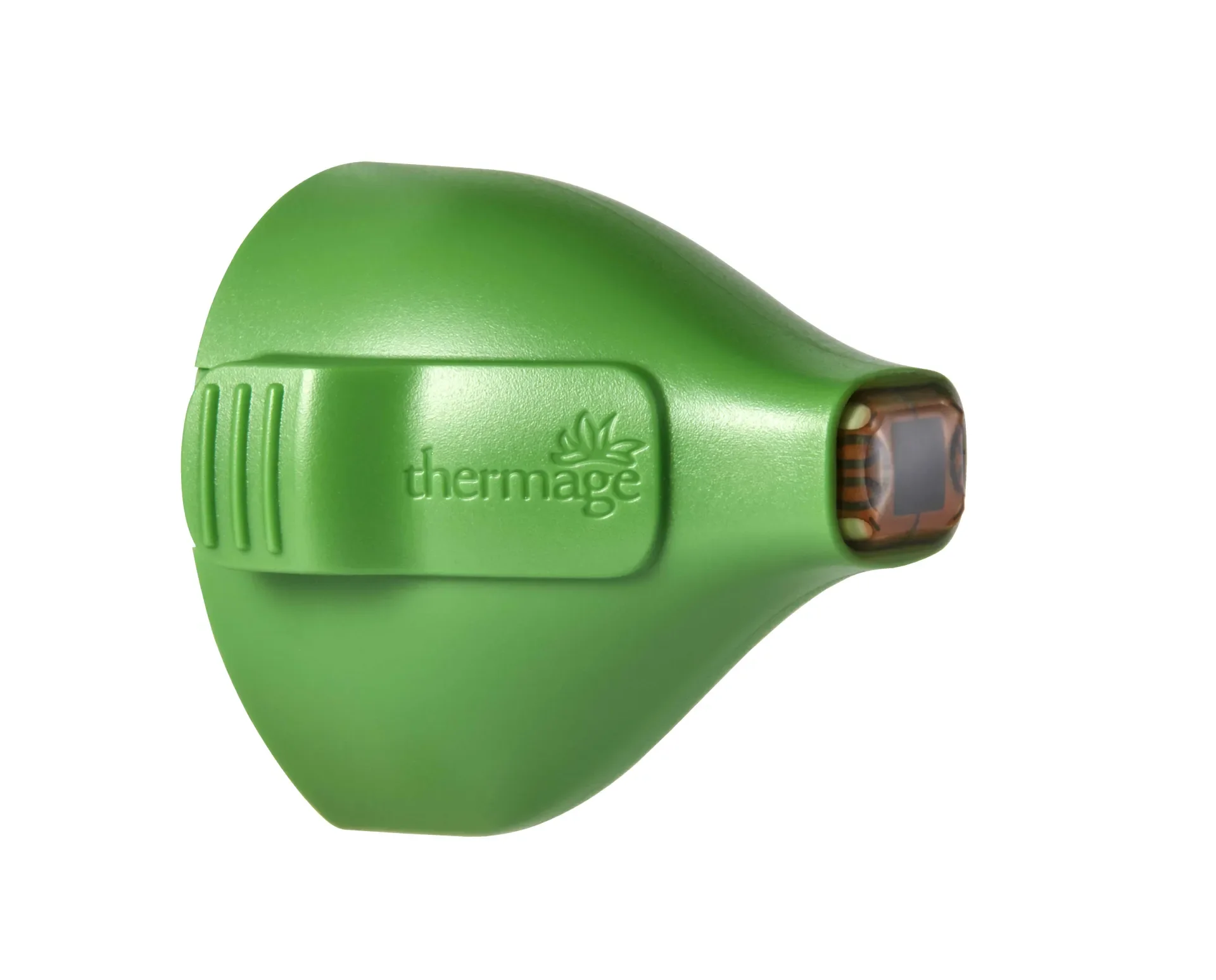
Thermage FLX is the 4th-generation Solta Medical monopolar radiofrequency platform. It delivers controlled RF energy through a flat-tip handpiece — Total Tip 4.0 is the current standard size — across the dermis and into the subcutaneous adipose layer, with simultaneous cryogen cooling at the skin surface. The thermal effect denatures existing collagen fibres immediately and triggers a wound-healing cascade that deposits new collagen over three to six months. The clinical reading is volumetric tightening of the dermal envelope: improved skin firmness, reduced fine-line laxity, modest tightening of jowl and submental contour. The 4th-generation FLX upgrade adds AccuREP automatic energy calibration, the vibrating cooling comfort tip, and the Eyes Total Tip for periocular work. The platform is FDA-cleared and CE-marked. Crucially, Thermage FLX does not penetrate the skin — there are no needles, no microchannels, no entry wounds. The energy is delivered transcutaneously from the surface tip.
InMode Morpheus8 — RF microneedling, different lane
Morpheus8 is the InMode RF microneedling platform — a different category of RF treatment from Thermage FLX. Morpheus8 uses an array of insulated bipolar microneedles that penetrate the skin to a configurable depth (typically 1 to 4 millimeters) and deliver RF energy at the needle tip. The mechanism combines mechanical micro-injury (the needle channels) with thermal coagulation (the RF) to drive remodelling at a deeper plane than topical radiofrequency reaches. The clinical reading is different from Thermage: skin texture refinement, scar remodelling, sub-dermal contouring at deeper depths, and acne-scar improvement. Morpheus8 produces visible downtime — pinpoint bleeding, redness for 24 to 72 hours, scattered scabs for several days — that Thermage FLX does not. The two platforms are not substitutes; in Korean clinical practice they are sometimes sequenced (Thermage for the dermal envelope, Morpheus8 for textural and deeper structural work), with several weeks between sessions. Pricing in Myeongdong runs roughly comparable on a per-session basis; Morpheus8 typically requires 2 to 3 sessions for the protocol while Thermage FLX is single-session per cycle.
Sylfirm X and Potenza — pulsed-wave RF microneedling
Sylfirm X (also sold as Potenza in some markets) is another RF microneedling platform with its own technical positioning — the differentiator is the pulsed-wave RF delivery, which the manufacturer claims produces selective effect on melanocytes and vascular structures alongside the textural remodelling. In Korean clinical practice, Sylfirm X is frequently chosen for melasma-adjacent indications, redness reduction, and barrier-repair protocols where pure thermal RF would be more aggressive than the patient tolerates. The mechanism overlap with Morpheus8 is significant — both are RF microneedling — but the pulsed-wave delivery and the thinner needle array give Sylfirm X a different feel and a different post-treatment profile. Like Morpheus8, Sylfirm X is not a substitute for Thermage FLX; it occupies the textural-and-pigmentary lane that Thermage does not address. Many Myeongdong clinics offer both platforms and will recommend the appropriate one based on the patient's primary indication rather than treating them as interchangeable.
Indiba — non-thermal capacitive RF, recovery lane
Indiba is the outlier in this comparison. It is a capacitive-resistive RF system that operates at 448 kHz and is designed for non-thermal circulatory and recovery effect rather than the controlled thermal damage that Thermage FLX or the microneedling platforms produce. In Korean clinical practice, Indiba is most often deployed as an adjunctive recovery treatment — for example, a course of Indiba sessions after a Thermage FLX or Ultherapy session to support the early-phase healing and reduce post-treatment swelling. Indiba is not, in honest reading, a substitute for Thermage FLX for skin tightening; the depth and dose of thermal effect are simply not comparable. Tier-one mainland readers who encounter Indiba marketed as a 'no-pain alternative to Thermage' on Xiaohongshu (小红书) should treat that framing skeptically — the no-pain claim is correct, but the equivalence claim is not.
Comparison table — what each platform actually does
Read the table by lane rather than by score. The categories below are not a ranking; they are mechanism-and-indication groupings.
| Platform | Mechanism | Primary indication | Sessions per cycle | Visible downtime |
|---|---|---|---|---|
| Thermage FLX | Monopolar RF, surface tip, volumetric dermal heating | Skin tightening, fine-line laxity, jowl/submental envelope | 1 (annual maintenance) | Minimal — hours of redness |
| InMode Morpheus8 | Bipolar RF microneedling (1-4mm) | Texture refinement, scar remodelling, deep contour | 2-3 | Visible — 1-3 days redness, scattered scabs |
| Sylfirm X / Potenza | Pulsed-wave RF microneedling | Texture, melasma-adjacent, redness, barrier | 3-4 | Moderate — 1-2 days redness |
| Indiba | Capacitive RF (448 kHz), non-thermal | Recovery, circulation, post-treatment support | Course of 4-10 | None — no thermal damage |
How Korean clinics actually sequence these platforms
The honest reading from Myeongdong clinical practice in 2026 is that Thermage FLX and the other RF platforms are usually sequenced rather than substituted in patients with multiple indications. A common combination programme structures Thermage FLX as the volumetric tightening anchor of the protocol, with Morpheus8 or Sylfirm X added on a separate visit two to four weeks later for the textural or scar-remodelling work that monopolar RF does not address. Indiba may then be offered as a recovery adjunct in the post-treatment window. Patients with single-indication presentations — for example, a tier-one mainland visitor whose primary concern is jowl laxity with no significant texture or scarring — typically need only the Thermage FLX session and skip the additional platforms. The protocol planning is the consulting physician's job, and the right Myeongdong clinic will diagnose the indication first and propose the platform mix second, not the other way around. A clinic that proposes the platform mix before establishing the indication is upselling rather than diagnosing.
Which platform fits which patient — honest positioning
For tier-one mainland readers running the first comparison pass on Xiaohongshu (小红书) or Weibo (微博), the platform-to-patient mapping reads as follows. Thermage FLX is for patients in their 30s through 50s with mild-to-moderate skin laxity, fine-line concerns, and a preference for a single annual maintenance treatment with minimal downtime — the trip-friendly profile. Morpheus8 is for patients prioritizing texture, scar remodelling, or deeper sub-dermal contouring who can absorb 2 to 3 sessions and a week of visible downtime per session. Sylfirm X is for patients with melasma-adjacent or redness presentations alongside textural concerns who tolerate moderate downtime. Indiba is an adjunct, not a primary treatment for skin tightening. The Korean clinical landscape supports all four platforms; the right choice depends on what the patient's skin actually shows, not on which platform has the loudest Xiaohongshu coverage.
How tier-one mainland Xiaohongshu coverage frames these comparisons
On Xiaohongshu (小红书) the comparison-frame between Thermage FLX and the RF microneedling platforms tends to flatten in ways that mislead first-pass readers. Three recurring framing patterns warrant explicit pushback. First, the 'pain comparison' frame — sponsored notes will rate Indiba as 'painless' and Thermage as 'painful' and imply equivalence on the tightening axis, which is technically false on the equivalence claim. Second, the 'downtime comparison' frame — Thermage's near-zero visible downtime is sometimes positioned against Morpheus8's 1-3 days of visible recovery as if they are deciding the same patient's calendar; in fact, Morpheus8 produces remodelling at depths Thermage does not reach, so the calendar-comparison is the wrong frame. Third, the 'price-per-session' frame — Sylfirm X protocols typically run 3-4 sessions while Thermage runs 1, which means per-session pricing comparison without total-protocol context produces misleading reads. Tier-one mainland readers seeing these framings on Xiaohongshu should treat them as marketing artifacts rather than honest comparisons. The honest comparison is mechanism, indication, and total-protocol cost, not single-axis surface metrics.
How Myeongdong clinics actually consult on platform selection
When a tier-one mainland visitor walks into a Myeongdong consultation room with a Xiaohongshu (小红书) shortlist of four RF platforms, the senior physician at a reputable clinic does not engage with the platform-as-shortlist frame. The standard tier-one consultation runs in the opposite direction: the physician examines the skin, identifies the primary indication (volumetric laxity, textural concerns, pigmentary presentation, scar remodelling needs, or some combination), and then proposes the platform mix that addresses the indication. The platform names enter the conversation after the diagnostic frame is established, not before. Tier-one mainland readers running multiple consultations in a single Myeongdong day will quickly notice the difference between clinics that diagnose first and clinics that recommend the platform the patient walked in asking about. The first pattern is the reputable workflow; the second pattern is upselling against a marketing-driven shortlist and produces less consistent outcomes. The honest Myeongdong consultation may end with the physician recommending a platform the patient did not arrive interested in, or recommending against a platform the patient did arrive interested in. That diagnostic conversation is what the consultation is for.
“On Xiaohongshu the four platform names appear in the same comparison lists. They do not compete in the same lane. Pretending they do produces the wrong decision frame.”
Wang Yu-Han, editorial lead
Frequently asked questions
Is Morpheus8 better than Thermage FLX?
They are different lanes. Morpheus8 is RF microneedling for textural and deeper structural work; Thermage FLX is monopolar RF for volumetric dermal tightening. Tier-one Korean clinics frequently sequence them on separate visits rather than choosing between them.
Can Sylfirm X replace Thermage FLX for skin tightening?
Generally no. Sylfirm X is pulsed-wave RF microneedling positioned for textural and pigmentary work; the volumetric tightening that Thermage FLX produces is not the same mechanism. Replacing one with the other usually disappoints in both directions.
Is Indiba painless compared to Thermage?
Yes — Indiba is non-thermal and produces no painful sensation. But it is also not a tightening treatment; it is a circulatory-and-recovery adjunct. The painless framing is correct; the equivalence framing is misleading.
Which platform has the longest result duration?
Thermage FLX results typically persist 12 to 24 months from a single session. Morpheus8 and Sylfirm X results, depending on the protocol and number of sessions, persist 12 to 18 months from the completed series. Indiba effect is short-acting and requires repeated courses.
Are all four platforms available in Myeongdong?
Most tier-one Myeongdong aesthetic clinics offer at least Thermage FLX plus one of the RF microneedling platforms. Indiba is widely available but more often in skincare-focused clinics than in the Thermage-tier facilities.
How do I choose between Morpheus8 and Sylfirm X if I need RF microneedling?
The senior physician should diagnose first. Morpheus8 typically suits deeper structural and scar work; Sylfirm X suits melasma-adjacent and barrier-repair indications. The platform mix is a secondary decision after the diagnostic frame.
Can I do Thermage FLX and Morpheus8 on the same trip?
Generally yes, on separate visits 2 to 4 weeks apart — which means a longer trip or two trips. Same-day combination is not the standard protocol. Tier-one Korean clinics will sequence rather than overlap them.
Does Indiba help with Thermage recovery?
Some Korean clinics offer Indiba sessions in the days following Thermage FLX as an adjunct to support early-phase healing and reduce transient swelling. The evidence base is limited but the adjunct profile is reasonable for patients who tolerate the additional sessions.