Device Note
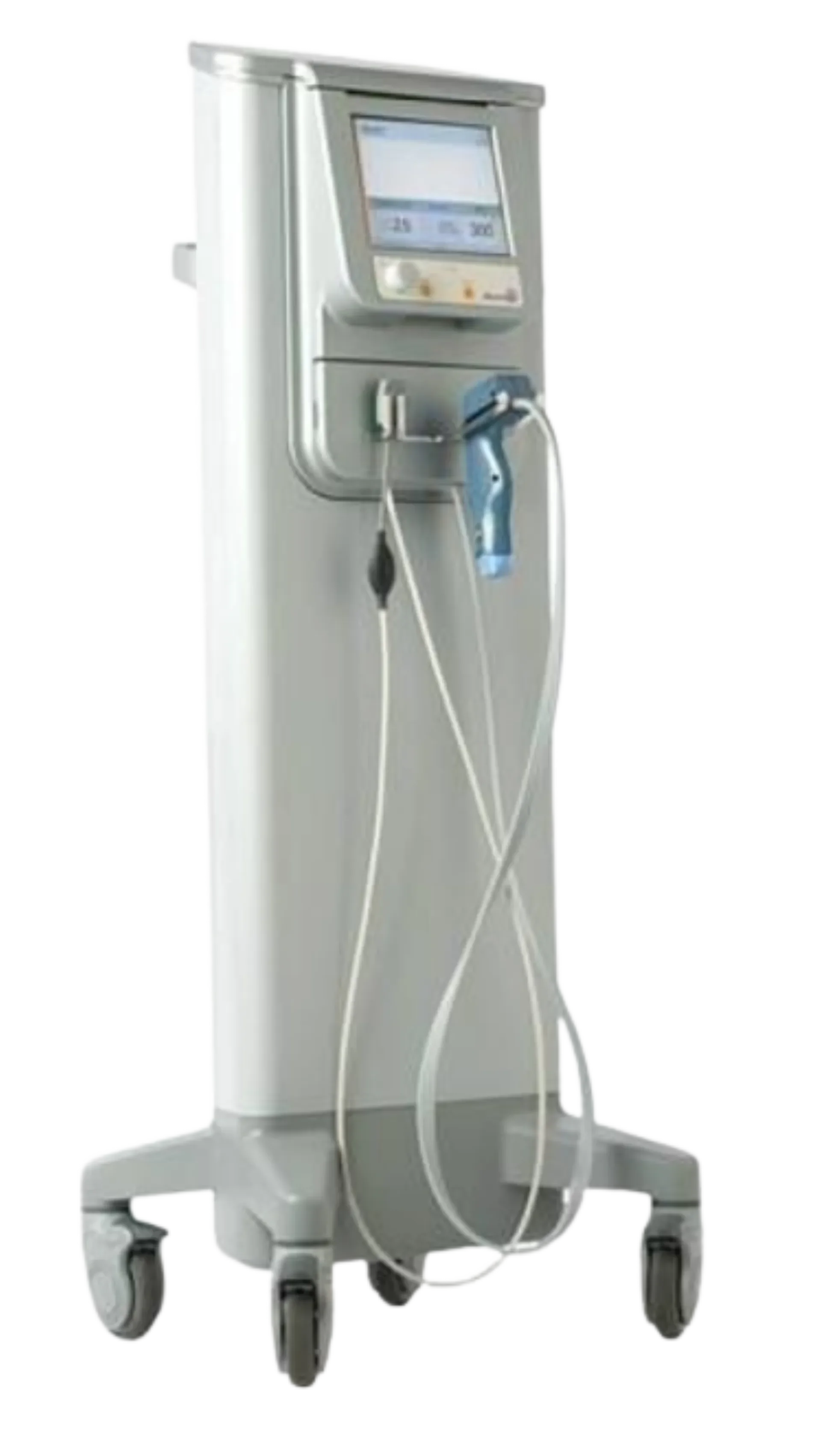
Thermage FLX Body in Myeongdong
Body Total Tip protocols for abdomen, arms, and thighs — the laxity-improvement bracket, the cellulite reality check, and when a fat-volume protocol is the more honest pathway.
Body Thermage is the part of the FLX menu where the gap between Xiaohongshu (小红书) marketing and clinical reality is widest. The before-and-after pairings circulating on Weibo (微博) and Douyin (抖音) routinely show dramatic abdominal contour shifts, post-pregnancy skin retraction closer to a tummy-tuck result than an RF protocol, and arm and thigh transformations that would honestly require liposuction or surgical excision. Tier-one mainland visitors arriving in Myeongdong with these expectations are setting themselves up for disappointment. The honest reading is that body Thermage FLX delivers a real but moderate skin-laxity improvement, a marginal cellulite shift in a narrow patient bracket, and nothing meaningful for fat volume — which means the patient expecting fat reduction walks away unsatisfied at month three regardless of session quality. This page covers the body Total Tip protocol, the realistic improvement bracket for abdomen, arms, and thighs, the cellulite evidence base, and the framework for deciding whether body Thermage is the right move or whether a fat-volume protocol or surgical referral is the more honest answer. Editorial perspective by Wang Yu-Han.
Body Total Tip footprints — what is on the menu and how the energy profile differs
The Solta 4th-generation Thermage FLX platform ships with body-calibrated Total Tip footprints larger than the standard 3.0 cm² Face Tip — the body tips run in the 3.0 to 16.0 cm² range depending on the manufacturer-licensed variant available in Korea. The larger footprint matters for two reasons. First, body skin is anatomically thicker than facial skin (1.5 to 3.0 mm dermal depth on the abdomen versus 1.0 to 1.5 mm on the cheek), and the energy profile is calibrated for the deeper dermal target. Second, the treated surface area is substantially larger — a full-abdomen protocol covers a treatment zone twenty to thirty times the surface area of a full-face session — and the larger footprint allows clinically reasonable session times. A body protocol typically runs 90 to 150 minutes versus 60 to 90 for full face. Tier-one mainland visitors should plan the Myeongdong itinerary accordingly: an afternoon body session does not leave time for the evening shopping circuit at the same energy level. The body tip is a Solta consumable and the cost flows into the patient invoice as a line item — verify that the quoted protocol uses the genuine Solta body tip rather than an unlabelled adapter.
Abdominal protocol — the post-pregnancy laxity bracket and the realistic response
The most common body Thermage indication for tier-one mainland visitors is post-pregnancy abdominal skin laxity. The presentation is familiar: a patient in her early thirties to mid forties, one to three years post-delivery, with mild-to-moderate abdominal laxity, fine striae in the periumbilical zone, and a quality-of-skin shift in the lower abdomen that does not respond to diet and exercise. The body tip produces a real moderate firming response in this bracket — the skin retracts marginally, the crepe-texture quality improves, and the lower-abdomen contour shifts subtly. The bracket that does not respond meaningfully is the patient with significant diastasis recti, pendulous skin overhang, or significant subcutaneous fat contributing to the contour concern. Diastasis recti is a muscular-fascial problem and the appropriate intervention is physiotherapy or — in significant cases — surgical repair. Pendulous skin overhang is surgical anatomy calling for abdominoplasty rather than RF. The Xiaohongshu (小红书) before-and-after pairings showing dramatic post-pregnancy transformation are, in most cases, showing either a combined abdominoplasty-plus-RF protocol attributed to the RF alone, or a patient who lost significant weight in parallel. Body Thermage alone, on a patient realistically in the responsive bracket, produces a result that reads in mirror-comparison photographs but does not read in casual social-media scrolling.
Upper-arm protocol — the bingo-wings expectation gap and the response bracket
The upper-arm protocol is the second most common body Thermage indication for tier-one mainland visitors. The presenting concern is typically the posterior upper-arm laxity that develops in the late thirties and forties — sometimes called bingo wings or 拜拜肉 — and the patient arrives expecting a single body Thermage session to tighten the area into a defined contour. The honest clinical bracket is narrower. The response is moderate firming of mild-to-early posterior-arm laxity, marginal reduction of fine crepe texture, and a subtle quality-of-skin shift that reads in side-by-side comparison photographs. The response does not address the subcutaneous fat component that contributes to the visual contour in many presentations — fat-volume reduction is not the mechanism of RF tightening. It also does not address moderate-to-significant laxity with pendulous overhang on arm abduction; that is brachioplasty anatomy. Combination protocols — body Thermage paired with a fat-volume protocol such as CoolSculpting or Coolaser-Pro — are clinically reasonable for selected presentations but should be evaluated by the senior physician rather than improvised based on social-media self-diagnosis.
Thigh and buttock protocols — the cellulite expectation and what the evidence actually shows
The thigh and buttock protocols carry the strongest expectation gap among tier-one mainland visitors, because the Xiaohongshu (小红书) marketing layer has positioned body Thermage as a cellulite treatment with claims of dramatic improvement. The clinical-evidence reading is more modest. The published evidence base for RF skin tightening in cellulite indication shows moderate improvement in early stages (Nürnberger-Müller grade 1 to 2) for a portion of patients, no clinically meaningful improvement in advanced stages (grade 3 to 4), and substantial inter-patient variability that does not correlate well with pre-treatment imaging. The honest framing is that the patient with early cellulite, mild thigh laxity, and a quality-of-skin concern may see a moderate response in the month-three to month-six window; the patient with advanced cellulite and significant subcutaneous-fat contribution will not. Combination protocols pairing body Thermage with mechanical-acoustic technologies, deep-tissue RF platforms, or targeted injection adjuncts are emerging in Korea, but the evidence base is still developing and most trial data does not extend beyond 12-month follow-up. Be skeptical of consultations framing body Thermage as a primary cellulite intervention without the bracket-and-evidence framing first.
Session day — what the body protocol actually feels like in Myeongdong
The body Thermage session typically runs 90 to 150 minutes door-to-door depending on treatment zone and tip footprint. It begins with a 20-to-30 minute topical anesthetic application (lidocaine 5 to 10 percent compounded cream, sometimes with occlusive dressing for deeper penetration), continues with patient positioning that exposes the target zone while preserving modesty, and proceeds through the shot pattern with the physician verbally confirming each subzone. Tier-one mainland visitors describe the sensation as a slow warming pulse with brief sharp moments at highest-energy zones — discomfort 'tolerable, especially compared with the early-generation body Thermage'. The 4th-generation FLX vibrating handpiece and synchronized cooling reduce body-session discomfort meaningfully versus the prior platform. After the session the zone presents diffuse pinkness resolving over 30 to 90 minutes, occasional mild swelling at high-energy zones resolving within 24 to 48 hours, and a warm sensation fading over 60 to 90 minutes. No incisions, no bandages, no scabs; tier-one visitors typically resume their Myeongdong itinerary the same evening — though a full-abdomen or full-thigh session day is a lower-energy evening than face-only.
How the body result lands — month-three to month-six read and the maintenance question
The body Thermage result lands on a slightly longer timeline than the face protocol. The first subtle response shows at weeks four to six rather than weeks two to four; peak response lands at month four to six rather than month three; and the plateau extends through months six to fifteen. The longer timeline reflects the deeper dermal target and slower collagen-remodelling kinetics in body skin. The maintenance cadence is typically 18 to 24 months for the abdomen and 12 to 18 months for upper arms and thighs, with variability based on the patient's underlying laxity trajectory, weight stability, and lifestyle. Tier-one mainland visitors who maintain stable weight, consistent strength-training, and disciplined sun protection on body skin (often unprotected in casual summer-wear) typically see longer-lasting results; visitors with significant weight fluctuation or repeated post-pregnancy cycles see shorter-lasting results regardless of session quality. Maintenance should be set by the senior physician at the month-three or month-six review rather than booked speculatively at the initial session.
When fat-volume protocols are the more honest answer — and the integrity of the de-scope conversation
The most useful moment in a Myeongdong body Thermage consultation is when the senior physician looks at the body-contour concern and says, 'This is a fat-volume conversation, not an RF conversation.' The cases where this de-scope is the honest move are common: the patient with significant subcutaneous fat contributing to upper-arm contour, the patient with localized abdominal or flank fat pockets that resist diet and exercise, the patient with pendulous abdominal skin overhang post-pregnancy. The appropriate interventions differ — CoolSculpting or Coolaser-Pro for localized subcutaneous fat in selected cases, surgical liposuction for larger-volume contour issues, abdominoplasty for pendulous abdominal skin, brachioplasty for significant upper-arm skin overhang. The integrity move for the senior physician is to surface the de-scope conversation before the booking is confirmed and refer toward the appropriate pathway rather than capturing the booking. Tier-one mainland visitors arriving with the Xiaohongshu (小红书) expectation that body Thermage is a one-stop body-contour intervention should expect — and reward — the consultation that de-scopes their expectation toward the appropriate intervention.
“Body Thermage tightens skin. It does not reduce fat. The patient who arrives expecting fat reduction is the patient who walks away unsatisfied — regardless of how well the session itself was performed.”
Wang Yu-Han, editorial lead
Frequently asked questions
How much does body Thermage FLX cost in Myeongdong?
Body protocols are priced based on the treatment zone (abdomen, arms, thighs, flanks), the tip footprint, and the number of shots delivered. The typical Myeongdong range runs meaningfully higher than face-only protocols because the body tip is a larger Solta consumable and the session length is longer. Specific pricing is covered on the dedicated pricing page; tier-one mainland visitors should verify that the quoted protocol uses genuine Solta body tips rather than unlabelled adapters.
Will body Thermage reduce my abdominal fat?
No. Body Thermage tightens skin via dermal collagen remodelling; it does not reduce subcutaneous fat. If the contour concern is fat volume, the appropriate intervention is a fat-targeting protocol such as CoolSculpting, Coolaser-Pro, or surgical liposuction depending on the volume and distribution. A senior physician at consultation should surface this distinction before the booking is confirmed.
Does body Thermage work for cellulite?
Moderate improvement in early-stage cellulite (Nürnberger-Müller grade 1 to 2) for a portion of patients; minimal-to-no clinically meaningful improvement in advanced cellulite (grade 3 to 4). Substantial inter-patient variability. Consultations that frame body Thermage as a primary cellulite intervention without surfacing the bracket-and-evidence reality should be approached with skepticism.
Can body Thermage tighten my post-pregnancy abdomen?
Mild-to-moderate post-pregnancy abdominal skin laxity responds with moderate firming. Significant diastasis recti (abdominal muscle separation) is a muscular-fascial problem and does not respond to RF — physiotherapy or surgical repair is the appropriate pathway. Pendulous lower-abdomen skin overhang is surgical anatomy and calls for abdominoplasty referral.
How long does a body Thermage session take?
Typically 90 to 150 minutes including topical anesthetic application, depending on the treatment zone and tip footprint. Tier-one mainland visitors planning a Myeongdong itinerary should budget a lower-energy evening on body-session day compared with face-session day.
When does the body result become visible?
First subtle response at weeks four to six, peak response at month four to month six, plateau through months six to fifteen, gradual fade after month 18. Body timeline is slower than face timeline because the dermal target is deeper and collagen-remodelling kinetics in body skin are slower.
Is body Thermage safe?
When performed by a senior physician with proper energy calibration and shot-pattern distribution, body Thermage is a well-tolerated minimal-downtime protocol. The Solta 4th-generation FLX platform's depth control and synchronized cooling reduce the historical concerns associated with earlier-generation body RF. Energy titration to the patient's anatomy is the clinical-risk reduction.
Should I combine body Thermage with a fat-reduction protocol?
Selected combinations are clinically reasonable. Body Thermage for skin laxity paired with CoolSculpting or Coolaser-Pro for localized subcutaneous fat is a common Myeongdong protocol for upper-arm, flank, and lower-abdomen presentations. Sequence, timing, and patient selection should be discussed with the senior physician at the consultation rather than improvised based on social-media protocols.