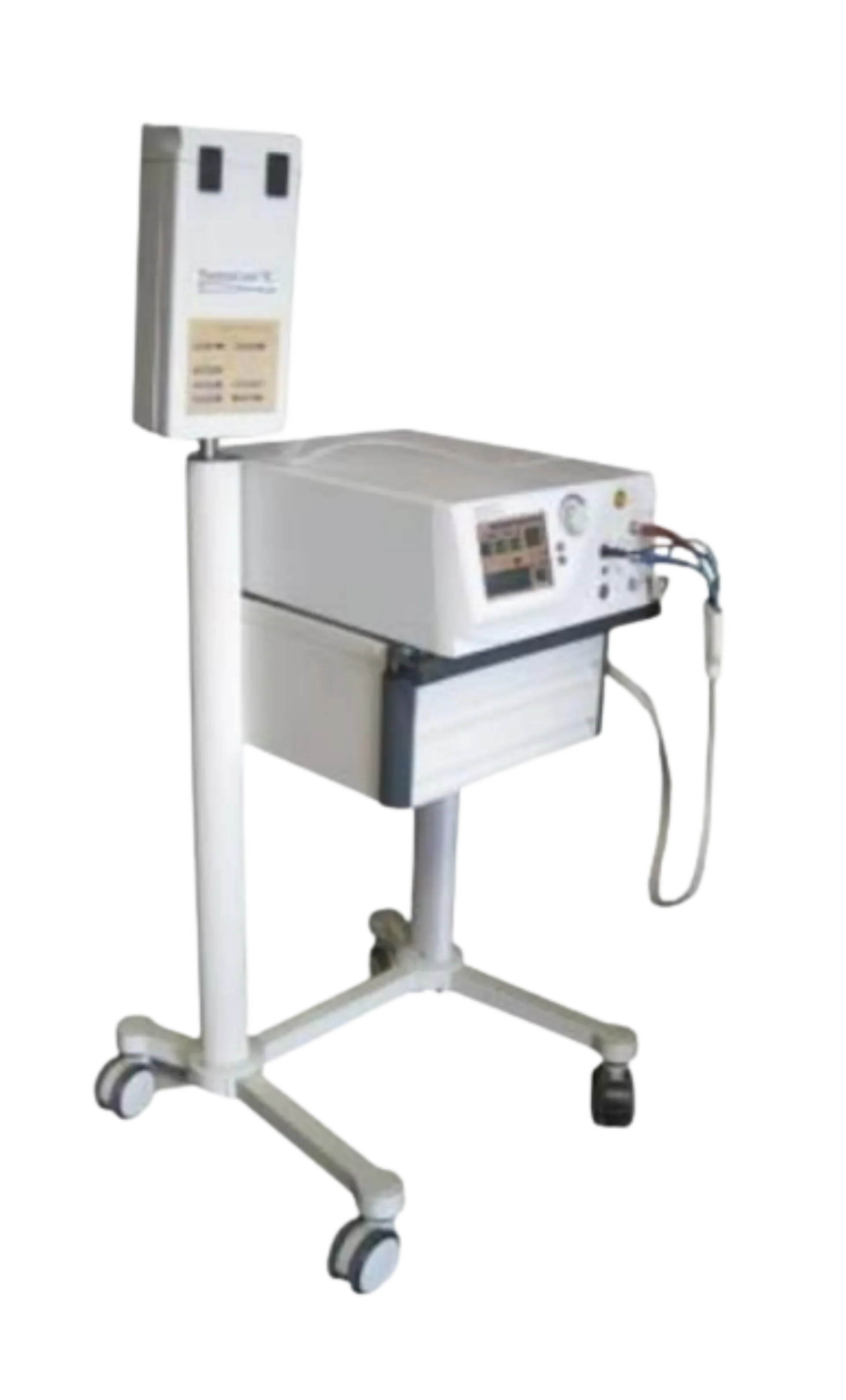
Device Note
The 黄金期 Golden Period of Thermage FLX Collagen Remodelling
Week 8 to week 12 — the peer-reviewed peak-response window for 4th-generation Solta Thermage FLX, framed for the tier-one mainland reader in the Myeongdong clinic corridor.
The Mandarin-internet phrase 黄金期 (huang-jin-qi, the golden period) is one of the most-searched terms in the Xiaohongshu (小红书) and Douyin (抖音) Thermage discussion of 2026, and it carries a precise clinical meaning that the tier-one mainland reader will benefit from understanding before booking a Myeongdong FLX treatment. The 黄金期 refers to the peer-reviewed window — week eight through week twelve after the procedure — when the dermal collagen remodelling response driven by 4th-generation Solta Thermage FLX reaches its visible peak. The honest reading: the patient who flies into Incheon, takes the limousine bus to Myeongdong, walks into the verified clinic on day one, and walks out the same afternoon is not yet seeing the treatment's deliverable. The deliverable is being built over the following ten weeks by a cascade of fibroblast activation, type-I and type-III collagen synthesis, and matrix-metalloproteinase-mediated tissue reorganisation that the Solta Medical clinical literature and the broader peer-reviewed dermatology record describe in detail. This essay decodes the 黄金期 timeline as it actually unfolds, week by week, and frames what the tier-one mainland reader should look for, what to ignore, and how the Myeongdong clinical workflow synchronises with the biology rather than against it.
What 黄金期 actually means at the cellular level
The 黄金期 (golden period) of Thermage FLX response is the visible manifestation of a three-phase wound-healing cascade that begins at the moment the monofilament-RF tip delivers volumetric heating to the dermal-subdermal junction at temperatures in the 55-65°C target band. Phase one is the acute thermal-injury response — the controlled denaturation of existing collagen fibres, the activation of dermal fibroblasts, and the release of growth-factor signals that recruit the wound-healing machinery to the heated zone. Phase one spans the first seven to ten days and is largely invisible to the patient beyond the day-one acute tightening. Phase two is the inflammatory-resolution and fibroblast-proliferation phase, which spans roughly weeks two through six, during which the fibroblasts begin synthesising new type-III collagen at the heated foci. The patient sees little visible change during this phase, and the Xiaohongshu (小红书) week-three 'nothing is happening' note that recurs across mainland patient communities is a normal and expected timeline marker. Phase three is the collagen-maturation and tissue-reorganisation phase, which spans weeks eight through sixteen, with the visible peak typically falling between week ten and week twelve. This is the 黄金期. The collagen has remodelled, the dermal-fibre architecture has reorganised, and the cumulative tightening response becomes externally visible.
The week-by-week Myeongdong patient experience, framed against the 黄金期
Mapping the cellular biology onto the actual Myeongdong patient experience produces a week-by-week framework that resolves most of the recurring tier-one mainland reader anxieties. Day one through day seven: acute tightening visible, the so-called 'immediate' response is real but clinically modest, and the post-treatment photograph the patient sends to the Mandarin-speaking coordinator on day three shows roughly 15 to 25 percent of the final response. Week two through week four: visible change plateaus or appears to recede, which is biologically the inflammatory-resolution phase doing its work and is not — repeat, is not — a sign the treatment has 'worn off' or failed. Week four through week eight: the early collagen synthesis becomes structurally meaningful but is mostly internal; the patient may see incremental tightening at the mandibular margin and the upper neck but the change is subtle enough that the patient often misses it without comparison photographs. Week eight through week twelve: the 黄金期 arrives. The cumulative response becomes externally visible, comparison photographs against the pre-treatment baseline show the full delta, and this is the window during which the tier-one mainland patient who flew to Myeongdong for the treatment finally sees what they paid for. Week twelve through month twelve: the response holds, with the gradual decline curve mapping onto the patient's underlying ageing trajectory rather than onto an FLX-specific drop-off.
Why the Myeongdong booking workflow matches the 黄金期 biology
The compact geography and Mandarin-speaking coordinator infrastructure of the Myeongdong clinic corridor produces a booking pattern that synchronises with the 黄金期 biology in a way that the tier-one mainland reader benefits from understanding. Most Myeongdong FLX clinics will schedule the post-treatment follow-up consultation at either week eight or week twelve — not at week one — because the Korean clinical convention recognises that a week-one follow-up evaluates the wrong response window. The Mandarin-speaking coordinator will typically check in by WeChat (微信) or WhatsApp at day three, day seven, and week three, with the substantive in-person or telehealth review reserved for week eight or week twelve. This workflow tracks the biology more honestly than the tier-one mainland clinics that schedule a week-two evaluation and frame it as the 'result' — the week-two frame is biologically a snapshot of the inflammatory-resolution phase and is the wrong response to evaluate. Tier-one mainland readers comparing a Myeongdong protocol against a tier-one Shanghai or Beijing protocol should weight the follow-up timing as a clinical-quality signal: a clinic that schedules the substantive review at week eight or later is reading the biology correctly; a clinic that books the 'result' review at week two is optimising for booking conversion or for marketing footage rather than for the patient's actual outcome.
The pre-黄金期 anxiety window, and how to manage it
The recurring tier-one mainland reader question across Xiaohongshu (小红书) patient communities in 2026 is some variant of 'I am at week three and I see nothing — has the treatment failed?'. The honest clinical answer is no, and the underlying biology is the inflammatory-resolution phase doing its required work before the collagen-synthesis phase delivers the visible response. Managing the pre-黄金期 anxiety window productively involves four practical habits. First, take and date a comparison-quality baseline photograph in three angles — frontal, three-quarter, and profile — before the treatment, in even daylight, with no makeup, and re-take the same three angles at week four, week eight, and week twelve. The progression is rarely visible day-to-day but is reliably visible photograph-to-photograph. Second, resist the urge to scroll Douyin (抖音) reveals at week three — the algorithmic feed will surface the outlier results filmed at the wrong timing and will calibrate the patient's expectation against an unreachable baseline. Third, maintain the basic post-treatment skincare discipline — sun protection, gentle cleansing, no aggressive resurfacing — during the inflammatory-resolution window, because aggressive intervention during this phase can disrupt the fibroblast-mediated synthesis. Fourth, communicate with the Mandarin-speaking coordinator at the scheduled day-three, day-seven, and week-three checkpoints — the coordinator is trained to recognise the normal-progression markers and will surface anything that genuinely warrants the physician's attention.
The 黄金期 in patients over 50, and the protocol adjustment that matters
The 黄金期 timeline holds across most age bands, but the magnitude of the visible response is age-modulated in a way that the tier-one mainland reader over 50 will benefit from understanding before booking the Myeongdong protocol. In the 30-to-50 age band, the fibroblast population is metabolically robust, the type-I-to-type-III collagen synthesis ratio is favourable, and the week-eight-to-twelve response is typically the patient's full FLX deliverable in a single session. In the over-50 age band, the fibroblast population is metabolically less responsive and the matrix-metalloproteinase activity is elevated, which means the week-eight-to-twelve response is real but typically more modest, and the protocol design that produces the strongest outcome is a two-session sequence — the second session timed at month four to six, well after the first session's 黄金期 has been documented and the cumulative response curve evaluated. The Myeongdong clinical convention recognises this age-modulated response and reputable physicians will raise the two-session sequence directly during the protocol-proposal stage of the consultation. Where a clinic frames the single-session protocol as the universal solution across all age bands without raising the cumulative-protocol consideration for the over-50 patient, that is a soft signal the clinic is operating closer to the booking-conversion frame than to the patient-outcome frame.
What the published clinical literature actually says about the 黄金期
The peer-reviewed clinical record on monofilament-RF-mediated dermal remodelling — the underlying technology that Solta Medical productises as the Thermage FLX platform — is unambiguous on the timeline. Studies indexed through PubMed on the controlled monofilament-RF clinical trials consistently report the visible response onset at week six to eight, the peak response at week ten to twelve, and the stable plateau through month twelve to eighteen. The Solta Medical clinical-literature record cross-references this timeline and frames the patient-counselling expectation accordingly. The MFDS device-approval framework in Korea (Ministry of Food and Drug Safety) requires the device-specific clinical performance documentation to align with the underlying peer-reviewed timeline, which is the regulatory reason a 4th-generation FLX device authorised for use in a Myeongdong clinic carries the documented eight-to-twelve-week peak-response framing in its approved indication. Tier-one mainland readers who encounter clinic marketing that frames a different timeline — most commonly the 'one week visible result' framing — should treat the framing as a marketing artefact rather than as a clinical claim. The biology does not adjust to the marketing calendar; the marketing calendar is overstating what the biology delivers in the timeline it claims.
“The patient walks out of the Myeongdong clinic on day one and the deliverable has not yet arrived. The fibroblasts are working. The deliverable arrives in week ten. The biology does not adjust to the booking calendar.”
Wang Yu-Han, editorial lead
Frequently asked questions
What does 黄金期 mean for Thermage FLX?
The 黄金期 (huang-jin-qi, golden period) is the peer-reviewed peak-response window for 4th-generation Solta Thermage FLX, spanning week eight through week twelve after the procedure. This is the window during which the cumulative collagen-remodelling response becomes externally visible and the tier-one mainland patient sees the treatment's full deliverable.
Why don't I see results at week three?
Week three falls within the inflammatory-resolution and early-fibroblast-proliferation phase of the collagen-remodelling cascade. The biology at week three is producing the substrate for the later visible response rather than delivering visible response itself. The absence of dramatic week-three change is the expected biological pattern and not a sign of treatment failure.
When should I take comparison photographs?
Take a comparison-quality baseline in three angles (frontal, three-quarter, profile) before the treatment in even daylight with no makeup. Re-take the same three angles at week four, week eight, and week twelve. The progression is reliably visible photograph-to-photograph even when it is not visible day-to-day.
Is the week-one tightening the actual result?
No. The week-one tightening is the acute collagen-fibre shortening response — clinically real but modest, typically representing 15 to 25 percent of the final response. The cumulative collagen-remodelling response that delivers the full result peaks at week ten to twelve.
Should I book a follow-up at week two?
A clinic that books the substantive 'result' review at week two is evaluating the wrong response window. Reputable Myeongdong FLX clinics schedule the follow-up at week eight or week twelve, with coordinator check-ins at day three, day seven, and week three to monitor normal-progression markers.
How does the 黄金期 differ in patients over 50?
The week-eight-to-twelve peak-response window holds, but the magnitude of the visible response is typically more modest because the fibroblast population is less metabolically responsive. The protocol design that produces the strongest outcome in this age band is a two-session sequence with the second session timed at month four to six after the first 黄金期 has been documented.
Can I do something to maximise the 黄金期 response?
Maintain the basic post-treatment skincare discipline — sun protection, gentle cleansing, no aggressive resurfacing — through the eight-week inflammatory-resolution and fibroblast-proliferation window. Aggressive intervention during this phase can disrupt the fibroblast-mediated synthesis. Otherwise, the biology runs its course; the patient cannot accelerate the collagen-maturation timeline.
How long does the 黄金期 response last?
The peak response is reached at week eight to twelve and holds as a stable plateau through month twelve to eighteen, after which the gradual decline curve maps onto the patient's underlying ageing trajectory. The decline is not an FLX-specific drop-off but the natural collagen-turnover process resuming its baseline trajectory.