Value-to-Spec Pick
5 Hanbok Rental Shops Near Myeongdong's Palaces — 2026 Editorial Guide
A Shanghai-based editor's reading of five hanbok rental shops within easy reach of central Myeongdong — palace-adjacent clusters, Bukchon studios, Insadong artisan houses, and premium department counters.
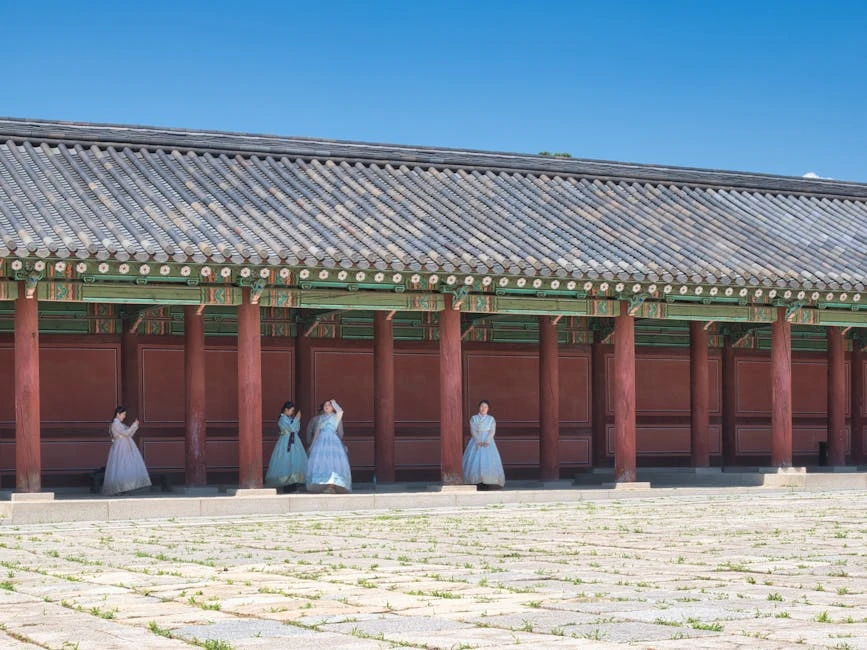
Hanbok rental, for a Myeongdong-based visitor planning a Gyeongbokgung or Changdeokgung palace day, is one of the more considered small rituals of a careful Seoul stay — closer in cadence to the ritual of borrowing a yukata from a Kyoto inn than to the casual hire of a costume on a tourist itinerary. The five shops here are the ones I have walked through, fitted at, and photographed across a sequence of central-Seoul stays since 2023; the shortlist is shorter than the broader Naver Place result count would suggest, because the casual hire stalls that have multiplied near the major palace gates over the past five years are not, on a careful inspection, of the same editorial register as the rooms that read as ateliers. The five entries below cover the four distinct rental contexts a thoughtful Myeongdong-based visitor needs to choose among: the canonical foreign-press shop, the long-running chain alternative, the on-the-day palace-perimeter cluster, the Insadong artisan house, and the premium department store counter. None is more than a single subway ride from a central Myeongdong hotel base; most are reachable by Line 3 within fifteen minutes door to door. The order is not a ranking — Korean editorial discipline reads named venues as a categorical edit rather than an ordered queue — but a rough sequence by the kind of trip each shop best supports, from the carefully booked palace day to the on-the-day spontaneous rental. The hanbok rental conversation has matured meaningfully in the broader region's social platforms over the past three years: the long-form Xiaohongshu notes that anchor a thoughtful first-time visit now consistently cover not just the rental shop but the silhouette discussion, the obi and norigae styling questions, and the question of whether to rent a single-day full set or to book a private studio session. The list below addresses each of these reading lines.
How this list was put together
This list is an editorial circuit, not a ranking — a categorical edit of five rental contexts that meet four conditions: the shop sits within a single subway ride or a short cab of a central Myeongdong hotel base; the rental quality is genuinely competitive with the broader Seoul market, with proper fabric care and an honest rotation; the staff hold conversational competence in at least one of English, Mandarin and Japanese; and the visit composes well alongside a palace day or a Bukchon hanok walk. I have walked through each shop in the editorial sample, fitted at three of them, and photographed at all five over the course of repeated Seoul stays since 2023. Pricing ranges are approximate to the most recent verified visit; the broader hanbok rental market adjusts its day rates seasonally, with the peak spring and autumn months running modestly higher than the quieter winter and summer windows. None of the venues featured here have any commercial relationship with this publication; the inclusions are editorial and final. Cross-referencing has been done quietly against the long-form Xiaohongshu and Naver Place review weight, not as a primary sorting mechanism but as a check against editorial drift — a shop that has slipped meaningfully in conversation over the past two years has been quietly removed from earlier versions of this list.
What is excluded, and on what reasoning
The casual hire stalls that have proliferated immediately at the Gyeongbokgung gate are excluded, not because they are unworthy of mention, but because their fabric care, fitting time and styling support do not, in my reading, match the rooms on this list. The lower-end tourist-circuit rentals that bundle a cartoon-style children's hanbok or a costume-quality polyester ensemble are excluded for the same reason. Specialist couture houses that handle made-to-order traditional hanbok for Korean weddings and major life events sit outside the rental conversation entirely and belong on a separate editorial piece. The hanbok counters at the smaller Korean department stores, with less consistent rotation calendars, have been held back in favour of the more reliably programmed flagship counter included here.
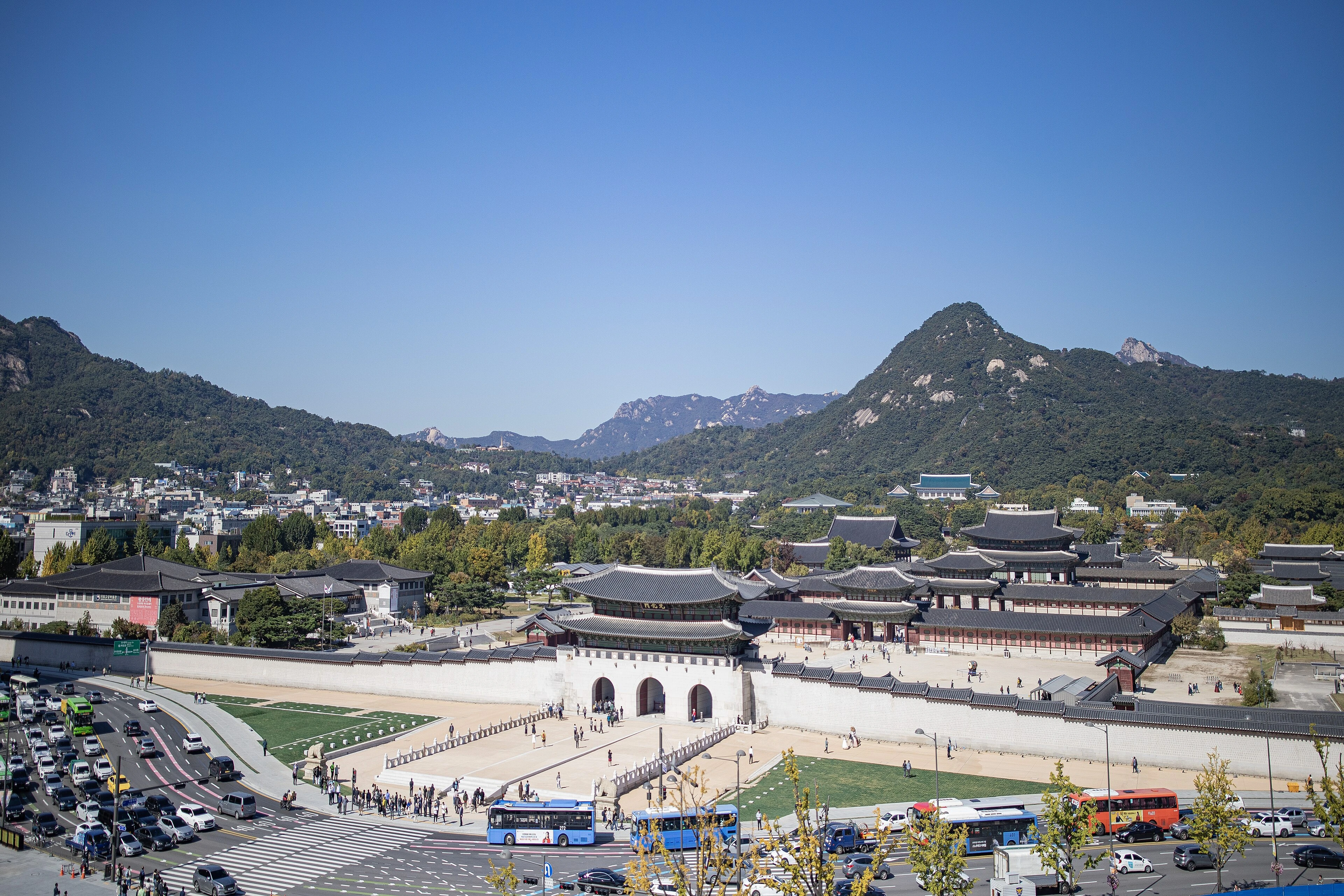
Featured A — Hanboknam, Gyeongbokgung branch
Hanboknam's Gyeongbokgung branch is the canonical foreign-press hanbok rental in central Seoul — the shop a thoughtful first-time Myeongdong-based visitor planning a palace day should book first, and the room that most reliably composes the careful Gyeongbokgung visit. The branch sits two minutes from Gyeongbokgung Station Exit 2 on Line 3, which means a single fifteen-minute subway ride from a central Myeongdong hotel base lands the visitor on the rental floor. The shop operates from nine in the morning to seven at night, supporting both an early-morning palace gate visit and a late-afternoon photography session. The rental floor itself is generously proportioned and the rotation is genuinely seasonal: the spring rotation brings out the lighter pastel jeogori and the chima silks with floral embroidery, the autumn rotation moves to deeper reds and dark greens with heavier collar trim, the winter selection includes lined inner layers and the longer durumagi outer coats. Staff competence in English, Mandarin and Japanese is reliable on the foreign-patient desk during weekday business hours; the fitting time runs fifteen to twenty-five minutes depending on the chosen silhouette, with thoughtful guidance on the layering and the small accessories — norigae pendants, daenggi ribbons, the embroidered shoes that compose the full silhouette. The four-hour day rate is the standard package; longer eight-hour and full-day rates are available for a careful photography session. The shop pairs naturally with the Gyeongbokgung morning gate-changing ceremony at the standard schedule, then the Bukchon walk afterward, then a Layered scones break before the cab back to Myeongdong. A reader from a tier-one mainland city, comfortable with the broader hanbok register from earlier Seoul stays, will recognise the editorial calm of this room from the start. A particular note on the booking workflow: the shop's foreign-patient desk handles reservations through a steady mix of email, the shop's official social channels, and the broader booking platforms used by Korean travel operators; a reader booking forty-eight hours in advance will reliably secure a morning fitting slot with the silhouette and season preferences clearly recorded. The included accessories at the standard package level are generous — a full norigae set, the daenggi ribbon, the embroidered shoes, the small inner-layer pieces — and the staff are courteous about photographing the visitor at the shop entrance for a polished first reference image before the palace walk begins.
- Strengths: international press recognition, multilingual staff, considered seasonal rotation
- Specialty: full hanbok set with accessories, palace-day rental, photography support
- Pricing tier: $$ (around ₩15,000-₩40,000 per day)
- Location: Gyeongbokgung gate area, fifteen-minute subway ride from Myeongdong
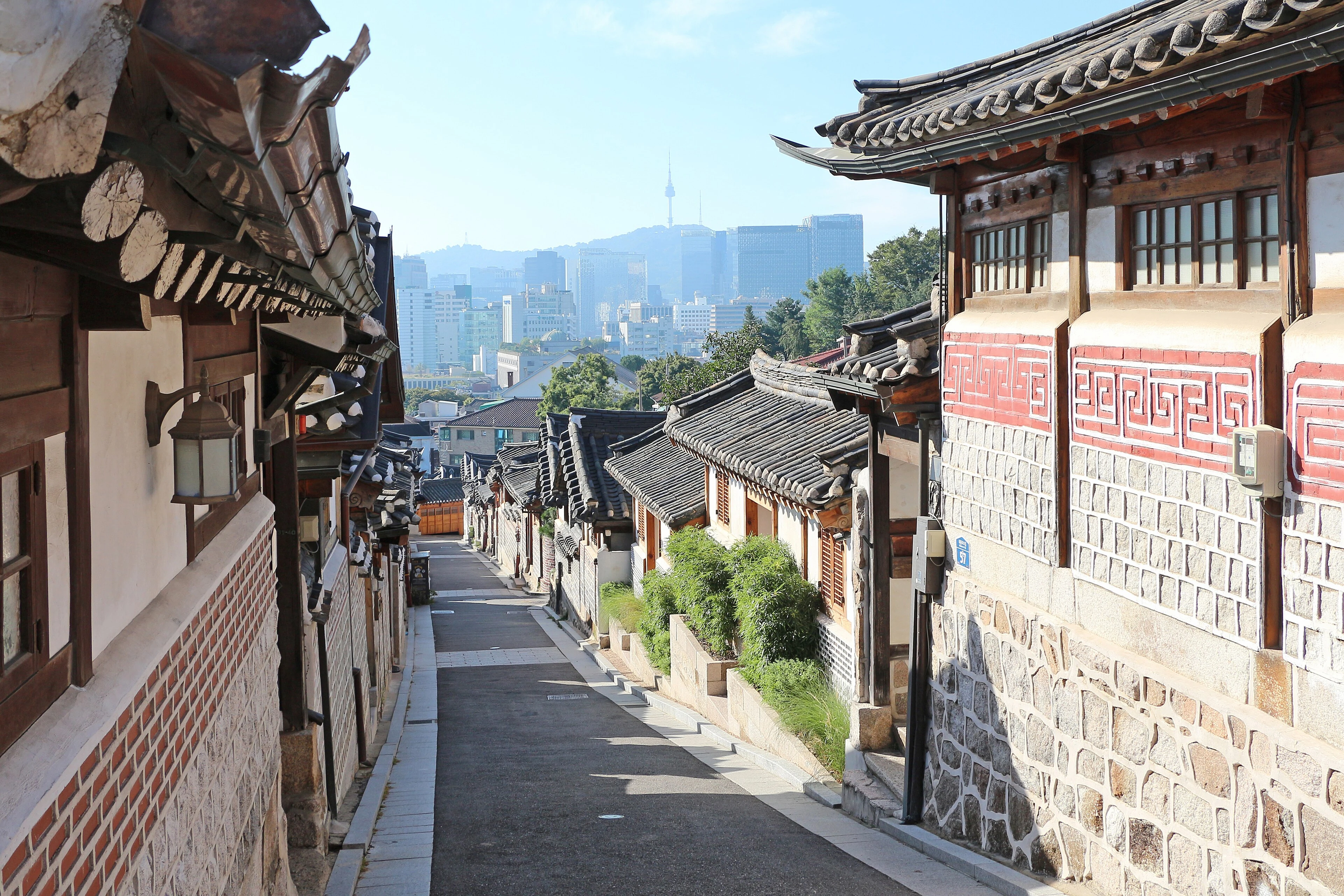
Featured B — Oneday Hanbok, Anguk-Bukchon
Oneday Hanbok runs as the long-established alternative to the larger foreign-press flagship, with several branches across the Anguk and Bukchon hanok lanes that compose the more considered second-choice rental for a Myeongdong-based visitor. The Anguk-Bukchon branch — closest to a Myeongdong hotel base by a single Line 3 subway ride, twelve minutes door to door — sits on a quiet residential lane four minutes north of Anguk Station, in a space that reads more as a small studio than as a rental floor. The rental rotation is competitive with the larger flagships, the fitting time runs ten to fifteen minutes for a standard set, and the staff handle a steady mix of English-speaking, Mandarin-speaking and Japanese-speaking visitors with quiet competence. Pricing runs modestly below the Hanboknam flagship at the entry tier, and the included accessories — the silver-thread norigae pendant, the small embroidered handbag, the satin daenggi — are generously chosen. The Bukchon hanok village walk sits immediately to the north, which composes a natural extension of the visit; a reader planning a careful afternoon can rent at Oneday, walk the upper Bukchon lanes for an hour with a small camera, take a sit-down lunch at one of the Bukchon courtyard restaurants, and return the hanbok at the four-hour mark before catching the subway back to Myeongdong. The shop operates from nine in the morning to seven at night, in line with the broader hanbok-rental calendar in this district. A practical note: the inner-courtyard fitting room is accessed by two shallow steps; staff are courteous about routing assistance for a visitor managing limited mobility, and the front-room fitting bay is the more accessible alternative.
- Strengths: Bukchon-adjacent location, competitive rotation, generous accessory selection
- Specialty: full hanbok set with accessories, Bukchon walk pairing
- Pricing tier: $$ (around ₩15,000-₩35,000 per day)
- Location: Anguk and Bukchon, twelve-minute subway ride from Myeongdong
Featured C — Gyeongbokgung perimeter hanbok cluster
The Gyeongbokgung perimeter rental cluster — a dense grouping of competing rental shops along Sajik-ro and the surrounding lanes within a five-minute walk of the palace's main gate — composes the more spontaneous rental option for a Myeongdong-based visitor who prefers on-the-day choice over a careful booking. The cluster is dense enough that a careful walking comparison across three or four shops takes thirty minutes and reliably identifies the best rotation for the visitor's silhouette, season and budget. Multilingual staff competence is consistent across the cluster at the larger shops; the smaller shops vary more, and a thoughtful reader will gravitate toward the rooms that hold a careful rotation rather than the rooms that hold the larger inventory of more casual styles. Pricing across the cluster runs modestly competitive — the day rate tends to settle within a tight range across most of the larger shops, with the variance coming from the included-accessories package and the rental duration. A standard four-hour rental composes the Gyeongbokgung visit and a forty-five-minute photography pause; an eight-hour rental supports a Gyeongbokgung-plus-Bukchon-plus-Insadong afternoon walk. The cluster works particularly well for a returning visitor who has rented before and knows the silhouette and accessory preferences in advance, and who can navigate the on-the-day fitting without translation support. For a first-time visitor without that context, the Hanboknam or Oneday booking is the safer practice; the perimeter cluster reads better as the second-trip option. A practical note on the on-the-day walk: arriving at the perimeter cluster by half past nine in the morning gives the visitor the widest selection of silhouettes and the gentlest fitting queue; by half past ten on a weekend morning, the cluster has warmed meaningfully, and a careful visitor may find that the first-choice silhouette has already been booked out at the larger rooms. The cluster also rewards a slow second walk after the fitting — a return loop through the smaller side lanes turns up several accessory specialists that the rental shops themselves do not always carry.
- Strengths: on-the-day flexibility, competitive pricing across the cluster, palace-adjacent
- Specialty: full hanbok rental, spontaneous palace-day visit
- Pricing tier: $$ (around ₩15,000-₩40,000 per day depending on shop)
- Location: Sajik-ro perimeter, fifteen-minute subway ride from Myeongdong
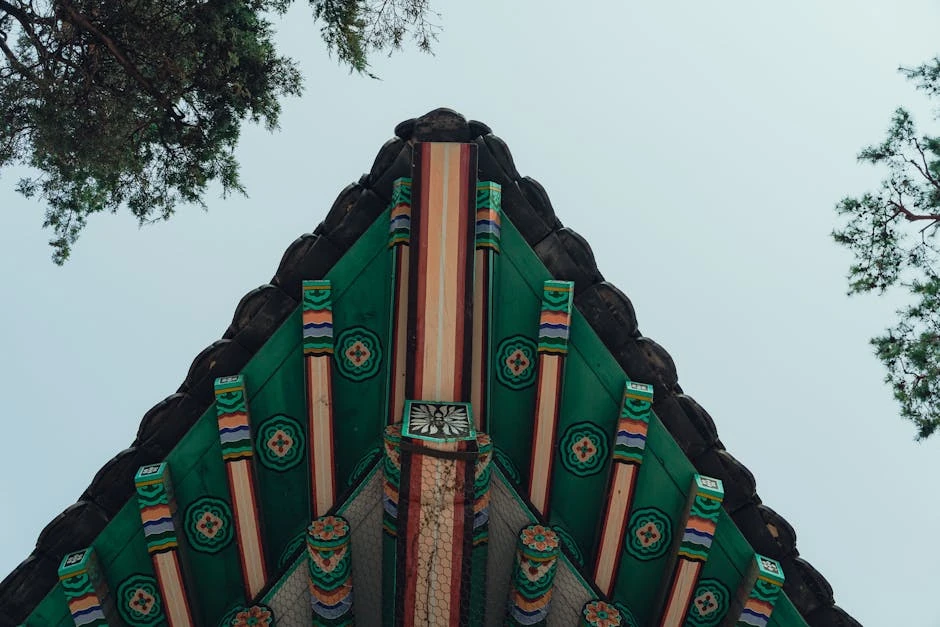
Featured D — Insadong hanbok and traditional craft houses
Insadong's traditional craft district holds a different hanbok register from the palace-perimeter rental cluster — closer in cadence to a craft atelier than to a rental shop, with a mix of full-set rentals, custom orders, traditional textile sellers, and small accessory ateliers that compose the wider hanbok ecosystem rather than the simple day-hire transaction. The district sits one subway stop east of Euljiro 3-ga on Line 3 to Jongno 3-ga, then a four-minute walk along the Insadong main lane; from a central Myeongdong hotel base, the total transit time runs roughly fifteen minutes. The hanbok houses along the main lane and the smaller side lanes vary meaningfully in register: some run a focused contemporary hanbok programme with younger Korean designers, some carry a more traditional flagship rotation in older fabrics, some specialise in the smaller accessories — the embroidered hairpins, the silver norigae, the embroidered fan — that compose a careful styling. Staff English competence is reliable across the larger rooms, with conversational Mandarin and Japanese at several of the foreign-visitor-oriented houses. The district pairs naturally with a tea-house pause at one of the traditional Insadong tea rooms — the older houses that serve the proper barley tea and the seasonal omija — and a small craft-store walk along the upper Insadong lanes. A reader looking for hanbok purchase rather than rental will find the Insadong houses meaningfully more useful than the palace-perimeter cluster, with several rooms holding a careful selection of contemporary hanbok pieces that travel home in a carry-on without trouble. The district's hanbok register reads particularly well in autumn, when the natural light on Insadong's main lane composes the photography afternoon at its best.
- Strengths: artisan register, contemporary designer rotation, accessory specialists
- Specialty: full rental, custom order, hanbok purchase, accessory pieces
- Pricing tier: Varies (rental + purchase + custom)
- Location: Insadong main lane, fifteen-minute subway ride from Myeongdong
Featured E — Lotte Department Store premium hanbok counter
The premium hanbok counter at the Lotte Department Store main building, on the southern edge of Myeongdong, is the entry on this list that supports a thoughtful purchase rather than a day rental — and the room that closes the editorial circuit for a visitor looking for a hanbok piece to take home rather than to wear for a single palace afternoon. The counter sits within a five-minute walk of a central Myeongdong hotel base, which composes the most accessible option on the list in pure walking-distance terms. The hanbok rotation at the premium counter runs to a careful selection of contemporary designer pieces, occasionally licensed labels with a serious Korean fashion-press register, alongside a more traditional made-to-order programme that takes seven to fourteen days to complete for the careful visitor with a longer Seoul stay. Pricing sits at the premium tier of the broader hanbok market; the made-to-order programme moves into the upper range. Staff English, Mandarin and Japanese competence is reliable at the counter throughout the standard operating hours, which run ten-thirty in the morning to eight at night. A reader planning a careful purchase should plan two visits — a first consultation visit to discuss silhouette, fabric and accessory choices, then a second visit a week later for the fitting — which composes a thoughtful pause across a longer Seoul stay. The wider Lotte building itself supports the visit with the Sogong-side restaurant floor and the lower-level patisserie counters; a reader pairing the hanbok visit with a careful lunch or a coffee break will find the building reads well as a half-day pause without leaving the Myeongdong perimeter.
- Strengths: Myeongdong-perimeter location, premium designer rotation, made-to-order programme
- Specialty: premium hanbok purchase, designer pieces, custom order
- Pricing tier: $$$ (premium, varies by piece)
- Location: Lotte main building, five-minute walk from central Myeongdong
Comparison table — at a glance
The table below sets the five rental contexts side by side on the editorial axes that matter to a Myeongdong-based visitor: walking or subway time, programmatic register, principal service focus, price tier and recommended visit length. The table is categorical, not ranked; it is meant to help a reader choose among shops by trip shape and rental purpose, not by ordinal position.
| Shop | Transit from Myeongdong | Focus | Pricing tier | Visit length |
|---|---|---|---|---|
| Hanboknam (Gyeongbokgung) | Subway Line 3, fifteen minutes | Foreign-press flagship rental | $$ | 45-90 min fitting + four-hour rental |
| Oneday Hanbok (Anguk-Bukchon) | Subway Line 3, twelve minutes | Bukchon-adjacent studio rental | $$ | 30-60 min fitting + four-hour rental |
| Gyeongbokgung perimeter cluster | Subway Line 3, fifteen minutes | On-the-day flexible rental | $$ | 20-45 min fitting + four-hour rental |
| Insadong artisan houses | Subway Line 3, fifteen minutes | Rental, custom order, purchase | $-$$$ | 60-120 min consultation |
| Lotte premium counter | Five-minute walk | Premium purchase, made-to-order | $$$ | 60-90 min consultation |
How to read the circuit, and on which days
The circuit is not a single-day proposition — five distinct rental contexts across two neighbourhood registers compose more than a careful visitor will work through in one afternoon, and the visitor who attempts it tends to leave with a flattened recollection of all of them. A more considered reading splits the rental decision into trip-shape categories. A first-time visitor planning a careful single palace day should book Hanboknam in advance; the booking is the simplest path to a reliable rental on the morning of the palace visit, and the multilingual staff support reads particularly well for the reader without prior context. A returning visitor with hanbok preferences already worked out can walk the Gyeongbokgung perimeter cluster on the day, comparing three or four shops in thirty minutes and choosing the rotation that matches the season and silhouette. A visitor on a longer Seoul stay who wants to combine rental with a hanbok purchase should plan two separate visits: the Insadong artisan walk on one afternoon, the Lotte premium counter consultation on another. The Bukchon-adjacent Oneday rental composes naturally for a visitor who wants to pair the hanbok wearing with the Bukchon hanok-village walk rather than the Gyeongbokgung palace ceremony — a different photographic and architectural register, and one that rewards a slower morning walk. Most rental shops on this list open at nine in the morning; the earliest palace gate ceremonies start at ten, which means a booked rental at nine, a fifteen-minute fitting, and a fifteen-minute walk to the palace gate compose a calm morning sequence. The Korean public holidays — the Lunar New Year period, Chuseok, Buddha's Birthday, the major palace ceremonies — produce variable closures and warmer crowds across the wider rental district; a careful visitor consults the palace calendar before committing to a date. A practical note on weather: rainy days compose the indoor-photography visits more cleanly than the outdoor palace days; the rental shops will routinely offer a courtesy clear umbrella with the rental, and the staff at the larger shops are courteous about routing a wet-weather alternative if needed.
Editorial note
This list is a categorical edit, not a ranking — Korean medical-tourism advertising regulation under Article 56 paragraph 4 of the Medical Service Act prohibits direct comparison or ranking of named healthcare facilities, and while a hanbok rental guide is not a clinic guide, the editorial discipline of treating named venues as a categorical edit rather than an ordered queue serves the reader well across both registers. None of the venues featured here have any commercial relationship with this publication. Pricing ranges, operating hours and rental terms are accurate to the most recent verified visit; readers planning a careful palace day should verify the day before, in the way one would for a respected restaurant. A correction policy is published on this site's editorial page. A wider note on the editorial cadence of this circuit: hanbok rental is a quiet ritual of a thoughtful Seoul stay, and the rooms on this list are the rooms that have repaid that ritual with a thoughtful welcome and a careful rotation. Reader corrections, feedback and updates may be sent to the editorial address noted in the site footer; the inclusions on this list are revised annually in the spring and autumn issues, on the rhythm of the Korean palace and craft-district seasonal calendar. A final reading note on the broader hanbok culture: the hanbok worn for a Gyeongbokgung palace day is, by long-standing courtesy of the Korean cultural heritage administration, granted free admission to the principal Seoul palaces and several of the smaller royal sites — a quiet acknowledgement of the cultural register of the visit that composes the careful palace day at no additional cost. The hanbok-wearing visitor will find that the staff at the palace gates and the curators in the heritage rooms reliably extend a courteous welcome that reads as part of the wider ritual. The wider broader register of the visit — the morning walk, the gate ceremony, the slow heritage-room reading, the afternoon tea pause — composes the kind of careful single day that a thoughtful visitor returns to on a subsequent Seoul stay.
Frequently asked questions
Which hanbok shop should I book first for a single palace day?
For a first-time Myeongdong-based visitor planning a single careful Gyeongbokgung palace day, Hanboknam's Gyeongbokgung branch is the most reliable booking — multilingual staff, considered seasonal rotation, fifteen-minute subway ride from Myeongdong, and a thoughtful fitting time. Booking forty-eight to seventy-two hours in advance via the shop's foreign-patient desk is the courteous practice; weekend mornings warm to a steady waitlist by ten o'clock, so a weekday visit reads more calmly.
Can I rent on the day without booking ahead?
Same-day rental is reliably feasible at the Gyeongbokgung perimeter cluster — a dense grouping of competing shops within a five-minute walk of the palace gate — and at most Insadong artisan houses for the smaller rentals. The larger flagship shops, including Hanboknam and Oneday, take same-day walk-ins when capacity permits but do not guarantee availability; for a careful palace day, the courteous practice is to book the previous day at the latest.
What is the typical four-hour rental price range?
Across the editorial circuit, the standard four-hour rental settles within a tight range — roughly ₩15,000 to ₩40,000 per day at the larger shops, with the variance coming from the included accessories package, the silhouette tier and the seasonal premium. The Lotte premium counter sits above this range as a purchase rather than a rental context. A reader budgeting for the palace day should plan roughly ₩30,000 for the standard middle-tier four-hour rental with a full accessories package.
Are the rentals adequate for serious photography?
Yes at four of the five contexts — Hanboknam, Oneday, the Insadong artisan houses and the Lotte premium counter all support serious photography, with full accessories packages and the kind of fabric care that reads well in close-up. The Gyeongbokgung perimeter cluster varies more by individual shop, with the larger and longer-established rooms reading meaningfully better than the smaller casual stalls. A visitor planning a careful photography session should book in advance at one of the larger shops, with a clear conversation about silhouette, season and accessories at the booking.
Is the experience appropriate for a visitor recovering from a quiet medical or wellness procedure in central Seoul?
The four-hour wearing of a hanbok composes a gentle wellbeing-paced afternoon — the silhouette is comfortable, the walking distances are gentle, and the palace and Bukchon walks are flat — and reads particularly well for a visitor pacing a quiet recovery day. A recovering visitor should choose the cooler spring and autumn months over the summer humidity, plan a shorter four-hour rental rather than a full-day eight-hour wearing, and pace the day to comfort rather than completeness. Anyone managing a specific medical recovery should follow the protocol provided by their treating physician, not a hanbok itinerary.
Are the male and children's hanbok options well covered?
Male hanbok options are reliably covered at all four rental contexts — Hanboknam, Oneday, the Gyeongbokgung perimeter cluster and several Insadong houses — with the rotation running to the standard hanbok jeogori, the wider durumagi overcoat, and the formal black or coloured chima ensembles. Children's hanbok in the appropriate age sizing is well covered at the larger shops and at most perimeter cluster rooms. Family bookings supporting matched sets are best arranged at Hanboknam or Oneday, where the staff handle multi-set bookings as a standard part of the foreign-visitor pathway.
Which days should be avoided for this rental circuit?
Major Korean public holidays — the Lunar New Year period, Chuseok, Buddha's Birthday, Liberation Day and a handful of others — produce a warmer crowd and variable closures across the wider rental district, with the palace perimeter rooms in particular reading at their busiest. The spring cherry-blossom season in April and the autumn foliage season in late October compose the peak rental window and warm to a steady waitlist on weekend mornings; weekday afternoons in those windows read more calmly. Mondays close several palace exhibitions and reduce the appeal of the palace-day rental, but the rental shops themselves operate on the standard weekday schedule.
Can I take the hanbok off-site and return it later, or is it gate-only?
The standard four-hour rental allows the visitor to take the hanbok off-site for the full duration — the palace walk, a Bukchon afternoon, an Insadong tea pause, a careful lunch — and return the set at the shop at the end of the rental window. The rentals are not restricted to the palace perimeter; the only practical restriction is that the rental should be returned within the booked duration, with a modest fee for late returns. A reader planning a longer wearing should book the eight-hour or full-day rate at the booking, rather than extending on the day.
What pairs well with a hanbok palace day for a Myeongdong-based visitor?
A considered hanbok palace day composes naturally with a Bukchon hanok-village walk after the palace ceremony, a sit-down lunch at one of the Bukchon courtyard restaurants, and a quiet afternoon tea pause at one of the traditional Insadong tea rooms. The wider afternoon may close with a slow Insadong craft-store walk or a return cab to Myeongdong for a late-afternoon cafe pause at one of the Hipjiro rooms documented elsewhere on this archive. The wearing pace rewards a slower itinerary rather than a packed visiting schedule, and the photographic record holds better.